Showing posts with label birthday. Show all posts

Monday, 5 May 2014

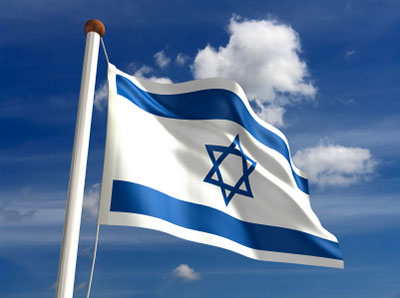
Happy Birthday Israel


Yom HaZikaron, Israel Independence Day, begins at sunset tonight. I came across the following essay by David A. Harris, the Executive Director of the American Jewish Committee and I agree with every point. Happy Birthday Israel, and many happy returns.

First, the Jewish people's identity is built on three legs -- a faith, a people, and a land.
The land is inextricable to the equation. Even when Jews were forcibly removed from the land, as they were more than once, they never, not for a single moment, lost the connection. It was core to their prayers and their belief systems. Jerusalem, physically and metaphysically, is at the center of Jewish existence. The determination of Jews to reaffirm that link, over literally thousands of years, is awe-inspiring.
Second, those who lived in or returned to the land before the rebirth of the state in 1948 faced indescribable challenges.
Those challenges could easily have defeated less determined people. The terrain itself was harsh and unyielding. The swamps were disease-infested. Water was scarce. Marauding Arab bands put them at risk. But they persisted.
Third, these pioneers, against all the odds, gave birth to field after field, tree after tree, job after job (for Jews and Arabs alike), and neighborhood after neighborhood.
And, equally, they gave birth to Modern Hebrew. They took an ancient language and rendered it contemporary, which in turn became the lingua franca of the new state.
Fourth, the politics of statehood were not uncomplicated.
It took 50 years from Theodore Herzl's vision of a reborn Jewish nation to the UN Partition Plan of 1947, which called for Jewish and Arab states to emerge from British-ruled Mandatory Palestine. During those five decades -- and all the global ups and downs, governments' sleights-of-hand, and power politics -- Jewish leadership in the land persevered. They were undeterred.
Fifth, that same Jewish leadership understood that half a loaf was better than none. While the Jews would have wished for a bigger state, and believed the historical facts warranted it, pragmatism prevailed over maximalism. And therein lies the fundamental difference between Jewish and Arab leadership at the time, and since.
The 1947 Partition Plan could have solved the national aspirations of Jews and Arabs alike (i.e., Palestinians, though the term was not then used by the UN). There would have been two states for two peoples, living, ideally, side by side in peace and cooperation. But the Arab insistence on the whole loaf triggered war. The war in turn created a refugee problem, and that dream of the whole loaf continues to be nurtured by too many Palestinian leaders.
Sixth, the 1948 war to annihilate the new state might have been Israel's first and, yes, last war, but it wasn't.
Vastly outnumbered and outarmed, the 650,000 Jews could have been vanquished by the five attacking Arab armies, including the British-trained Jordanians. But they dug in, fought on with often hard-to-acquire weapons, and eventually won, while losing one percent of their entire population -- the first of several wars Israel was to win to defend its very right to exist.
Seventh, Israel's ability to defend itself is nothing short of extraordinary. A country the size of New Jersey, and without a favorable military topography, has withstood repeated assaults of every kind -- wars, missile barrages, suicide bombings, kidnappings, lawfare, and modern-day blood libels.
The morale and commitment of Israelis to fulfill their national obligations -- when, no doubt, they'd much rather be studying, socializing, and traveling -- is remarkable. Alone, having never asked for the help of other nations' troops, they defend the state. And Israel's technical ingenuity in meeting each new challenge head-on has served as an object lesson for other countries. From Entebbe to Iron Dome, from Osirak to the Syrian nuclear plant, Israel has come up with viable answers to seemingly insurmountable threats.
Eighth, Israel has forged a far more cohesive, vibrant society than many predicted.
How, the skeptics asked, could Israel absorb Jews from scores of countries with different languages, political traditions, cultural norms, and religious practices? How could Israel forge a democratic state when so many refugees came from non-democratic Arab lands and communist societies -- and in a region, the Middle East, where there was absolutely no tradition of free, open societies? How could religious and secular Jews coexist? How could Israel absorb over 100,000 Ethiopian Jews, who hailed from villages that had no electricity or other modern accoutrements? And how would non-Jews, especially a large Arab community, fare as citizens of the State of Israel?
These are all works in progress, but, 64 years after the rebirth of Israel, it can be said that the centripetal forces binding the state together far outweigh the centrifugal forces at work -- and that's no mean feat, given the magnitude of each of the challenges.
Ninth, in the face of unrelenting threats and dangers, Israel could have turned inward, abandoned hope, and given up on peace, but it most assuredly has not.
Instead, Israel has embraced the world, sharing its vast know-how with developing countries and often being among the first on the scene when disaster strikes. It has affirmed life in a way that outsiders can hardly imagine. And, despite one spurned peace effort after another since the landmark treaties with Egypt (1979) and Jordan (1994) -- not to mention the experiences of withdrawal from southern Lebanon only to have Iranian-backed Hezbollah step in, or from Gaza only to have Hamas, whose charter calls for Israel's destruction, take control -- Israel still clings to the belief that peace, based on major territorial compromise and a two-state solution, is possible.
And tenth is what travelers see for themselves when they come to Israel.
As many first-time visitors have commented, they had no idea that Israel was so small or its security challenges so complex.
They had no clue that Arabic was an official language and Israeli Arabs, even those opposed to the state's very existence, have been elected to the Israeli parliament.
They were unaware that churches and mosques are found everywhere, with full freedom of worship protected.
They had no sense of how ancient and modern, at one and the same time, the country is.
They had no understanding of what a full-throttled democracy Israel is, including a feisty press, an independent judiciary, an array of active NGOs, political parties galore, and an argumentative, self-critical culture.
And they had no hint how proud of their country -- and optimistic about the future -- are the vast majority of Israelis.
For nearly 2,000 years, Jews could only dream of, and pray for, the rebirth of Israel. Today, it is a living, breathing, and pulsating reality. And I count myself among the lucky ones to see it unfold before my very eyes.

Monday, 15 April 2013

Happy Birthday Israel. 65 today!


On Sunday, Israel was remembering its fallen soldiers and victims of terror. Today, 15 April, is Israel’s 65th birthday. 
During the last 48 hours Israelis have  remembered all the people who gave their lives so that they might have freedom and a future to celebrate.
A week ago, I was in Israel on Holocaust Remembrance Day, a day of weeping and mourning. Each year there are less and less Holocaust survivors and the number of soldiers and civilians killed in Israel’s struggle for survival continues to grow. Everyone in Israel has lost a loved one in one of Israel's many wars. Either that or they know someone who has lost a loved one in conflict.
Israelis celebrate their country’s birthday every year and they do so because more than any other nation on earth, they never take their existence for granted.
So as Israel celebrates their 65th birthday, let us pray that the Lord will safeguard that vulnerable little country surrounded by enemies who constantly breathe out threatening and slaughter against them. May their God shine the light of His love on them and remove the veil of darkness that hides Messiah from their view.
Great God of Abraham! hear our prayer
Let Abraham’s seed Thy mercy share;
O may they now at length return,
And look on Him they pierced, and mourn.
Remember Jacob’s flock of old;
Bring home the wanderers to Thy fold;
Remember too Thy promised word,
Israel at last shall seek the Lord.
Though outcasts still, estranged from Thee,
Cut off from their own olive tree;
Why should they longer such remain?
For Thou canst graft them in again.
Lord, put Thy law within their hearts,
And write it in their inward parts;
The veil of darkness rend in two,
Which hides Messiah from their view.
Oh! haste the day, foretold so long,
When Jew and Greek, a glorious throng,
One house shall seek, one prayer shall pour,
And one Redeemer shall adore!
Thomas Cotterill
Happy 65th Birthday, Israel!

Monday, 9 May 2011

Happy Birthday to a Great Country


Sixty-three years ago today, on 5 Iyar in the Jewish calendar (14 May 1948), the state of Israel was reborn. Yom Ha’atzmaut, Israel’s Independence Day celebrates the day in 1948 when Israel’s first Prime Minister David Ben Gurion publicly read the country’s Declaration of Independence.

If the 5 Iyar falls on a Friday or Saturday, the celebrations are moved to the preceding Thursday. If the date falls on a Monday (like it does this year), the festival is postponed to Tuesday. Today, Monday 9 May, is 5 Iyar and so Yom Ha’atzmaut will begin at sunset tonight, when 6 Iyar begins.

Israel has much to be proud of. It is the hundredth smallest country in the world, with less than one thousandth of the world’s population, yet what that small country has achieved in 63 is unprecedented. Here are a few facts about Israel (for an even longer list, click here).

Israel is the only liberal democracy in the Middle East.

Israel has more scientists and engineers per capita than any other country and Israeli scientists publish more scientific papers than any other nation. Israelis hold more patents per person than citizens of any other nation. Israel is one out of eight countries capable of launching its own satellites into space.

An Israeli company has developed a revolutionary new drug that could solve the problem of Colony Collapse Disorder that has been wiping out bee communities around the world.

The first cell phone in the world was developed in Haifa, Israel and Israel holds the most High-Tech industries per population. It was there that the first camera chips were used in cell phones, and Israeli companies invented SMS texting and voice mail systems.

The “Xaver 400” and “800” devices show images below rubble and are used after earthquakes to search for survivors, and in hostage situations where the police need to see inside buildings.

“Earthquake Alert”, a home device to give early warning of earthquakes, was developed in Israel, as was “Safety Centre”, a device to assess driving habits and improve them, which has helped cut traffic accidents.

Computers
Most of the components of the Windows operating system were developed in Israel. The first PC anti-virus programme was invented in Israel and an Israeli company invented the network security technology behind PC firewalls.

The algorithm code used for sending e-mails was devised by an Israeli who worked at the Ben-Gurion University in Beer-Sheba, and USB flash drives were developed by MSystems.

Medicine
The world’s first blood bank was built at Beilinson hospital, ten years before Israel was reborn.

Israelis invented a camera that patients swallow to help doctors diagnose digestive tract diseases and save lives.

Babysense, a system that protects babies from the sudden infant death syndrome (SIDS) was invented in Israel.

Israel has been responsible for huge breakthroughs in treatment of AIDS.
Israeli scientists have created new ways to fight cancer, they have increased the efficiency of anti[cancer medicines and have developed the first radiation-free method to discover breast cancer.

Researchers at Ben Gurion University are working on a new delivery system for drugs used in cancer and Parkinson’s disease. The drugs are delivered directly to the affected part of the body and, in so doing, eliminates unwanted side effects.

Environmental protection
More than 85% of solid waste in Israel is treated in an environmental sound manner.
Drip irrigation system- invented by an Israeli almost 40 years ago. A major part of resolving the water crisis. Used around the world.

Israel has the record for most solar-powered water heaters per capita- 95% of homes have this technology and solar powered street and garden lamps are very common in Israel. The solar plate recharges throughout the day and at night it illuminates cities and parks.

An Israeli company was the first to develop and install a large scale solar power plant in the Mojave Desert in order to supply enough clean electricity to power 400,000 homes in central and northern California.

Disaster Aid
Israeli teams have often been among the first on the scene after natural disasters across the world. Israel’s significant contribution to relief efforts include earthquakes in Turkey (2000) and El Salvador (2001), and floods in Venezuela (1999) and in Mozambique (2000).

Within 48 hours of the 2004 tsunami off the Indonesian coast in the Indian Ocean, Israel airlifted massive amounts of emergency supplies, together with a team of fifty medical and rescue personnel. The supplies included tens of thousands of bottles of drinking water, 12 tons of food, 17 tons of baby food, nine tons of medicines, blankets, mattresses, beds and electricity generators.

Following the earthquake in Haiti in January 2010, the Israel Defence Forces (IDF) were the first to set up a field hospital, from which were treated 1,111 victims, including dozens of children. Israeli doctors performed 317 surgeries and delivered 16 babies in the hospital’s maternity ward; the mother of one of the newborns called her son Israel. Four Haitians were rescued with the assistance of the IDF search-and-rescue team. The 236-member IDF disaster relief delegation left 30 tons (27,216 kg) of medical equipment before departing Haiti.

Altogether now… Three cheers for Israel!