Showing posts with label Israel. Show all posts

Monday, 5 May 2014

Happy Birthday Israel


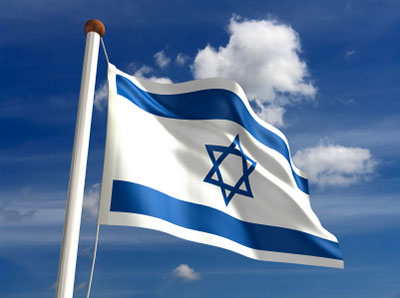
Yom HaZikaron, Israel Independence Day, begins at sunset tonight. I came across the following essay by David A. Harris, the Executive Director of the American Jewish Committee and I agree with every point. Happy Birthday Israel, and many happy returns.

First, the Jewish people's identity is built on three legs -- a faith, a people, and a land.
The land is inextricable to the equation. Even when Jews were forcibly removed from the land, as they were more than once, they never, not for a single moment, lost the connection. It was core to their prayers and their belief systems. Jerusalem, physically and metaphysically, is at the center of Jewish existence. The determination of Jews to reaffirm that link, over literally thousands of years, is awe-inspiring.
Second, those who lived in or returned to the land before the rebirth of the state in 1948 faced indescribable challenges.
Those challenges could easily have defeated less determined people. The terrain itself was harsh and unyielding. The swamps were disease-infested. Water was scarce. Marauding Arab bands put them at risk. But they persisted.
Third, these pioneers, against all the odds, gave birth to field after field, tree after tree, job after job (for Jews and Arabs alike), and neighborhood after neighborhood.
And, equally, they gave birth to Modern Hebrew. They took an ancient language and rendered it contemporary, which in turn became the lingua franca of the new state.
Fourth, the politics of statehood were not uncomplicated.
It took 50 years from Theodore Herzl's vision of a reborn Jewish nation to the UN Partition Plan of 1947, which called for Jewish and Arab states to emerge from British-ruled Mandatory Palestine. During those five decades -- and all the global ups and downs, governments' sleights-of-hand, and power politics -- Jewish leadership in the land persevered. They were undeterred.
Fifth, that same Jewish leadership understood that half a loaf was better than none. While the Jews would have wished for a bigger state, and believed the historical facts warranted it, pragmatism prevailed over maximalism. And therein lies the fundamental difference between Jewish and Arab leadership at the time, and since.
The 1947 Partition Plan could have solved the national aspirations of Jews and Arabs alike (i.e., Palestinians, though the term was not then used by the UN). There would have been two states for two peoples, living, ideally, side by side in peace and cooperation. But the Arab insistence on the whole loaf triggered war. The war in turn created a refugee problem, and that dream of the whole loaf continues to be nurtured by too many Palestinian leaders.
Sixth, the 1948 war to annihilate the new state might have been Israel's first and, yes, last war, but it wasn't.
Vastly outnumbered and outarmed, the 650,000 Jews could have been vanquished by the five attacking Arab armies, including the British-trained Jordanians. But they dug in, fought on with often hard-to-acquire weapons, and eventually won, while losing one percent of their entire population -- the first of several wars Israel was to win to defend its very right to exist.
Seventh, Israel's ability to defend itself is nothing short of extraordinary. A country the size of New Jersey, and without a favorable military topography, has withstood repeated assaults of every kind -- wars, missile barrages, suicide bombings, kidnappings, lawfare, and modern-day blood libels.
The morale and commitment of Israelis to fulfill their national obligations -- when, no doubt, they'd much rather be studying, socializing, and traveling -- is remarkable. Alone, having never asked for the help of other nations' troops, they defend the state. And Israel's technical ingenuity in meeting each new challenge head-on has served as an object lesson for other countries. From Entebbe to Iron Dome, from Osirak to the Syrian nuclear plant, Israel has come up with viable answers to seemingly insurmountable threats.
Eighth, Israel has forged a far more cohesive, vibrant society than many predicted.
How, the skeptics asked, could Israel absorb Jews from scores of countries with different languages, political traditions, cultural norms, and religious practices? How could Israel forge a democratic state when so many refugees came from non-democratic Arab lands and communist societies -- and in a region, the Middle East, where there was absolutely no tradition of free, open societies? How could religious and secular Jews coexist? How could Israel absorb over 100,000 Ethiopian Jews, who hailed from villages that had no electricity or other modern accoutrements? And how would non-Jews, especially a large Arab community, fare as citizens of the State of Israel?
These are all works in progress, but, 64 years after the rebirth of Israel, it can be said that the centripetal forces binding the state together far outweigh the centrifugal forces at work -- and that's no mean feat, given the magnitude of each of the challenges.
Ninth, in the face of unrelenting threats and dangers, Israel could have turned inward, abandoned hope, and given up on peace, but it most assuredly has not.
Instead, Israel has embraced the world, sharing its vast know-how with developing countries and often being among the first on the scene when disaster strikes. It has affirmed life in a way that outsiders can hardly imagine. And, despite one spurned peace effort after another since the landmark treaties with Egypt (1979) and Jordan (1994) -- not to mention the experiences of withdrawal from southern Lebanon only to have Iranian-backed Hezbollah step in, or from Gaza only to have Hamas, whose charter calls for Israel's destruction, take control -- Israel still clings to the belief that peace, based on major territorial compromise and a two-state solution, is possible.
And tenth is what travelers see for themselves when they come to Israel.
As many first-time visitors have commented, they had no idea that Israel was so small or its security challenges so complex.
They had no clue that Arabic was an official language and Israeli Arabs, even those opposed to the state's very existence, have been elected to the Israeli parliament.
They were unaware that churches and mosques are found everywhere, with full freedom of worship protected.
They had no sense of how ancient and modern, at one and the same time, the country is.
They had no understanding of what a full-throttled democracy Israel is, including a feisty press, an independent judiciary, an array of active NGOs, political parties galore, and an argumentative, self-critical culture.
And they had no hint how proud of their country -- and optimistic about the future -- are the vast majority of Israelis.
For nearly 2,000 years, Jews could only dream of, and pray for, the rebirth of Israel. Today, it is a living, breathing, and pulsating reality. And I count myself among the lucky ones to see it unfold before my very eyes.

Wednesday, 12 February 2014

Yasmine Perni Cries Out


I’ve just come back from a screening of Yasmine Perni’s film The Stones Cry Out. I didn’t actually see the film on account of the fact that, because of adverse weather conditions, it took me five hours to drive from Nottingham to Tunbridge Wells. The film started at 7.30pm and I arrived an hour late in a very spaced-out condition. But I was in time for the Question and Answer session.

I bought a DVD of the film afterwards and will post a review after I’ve found the time to watch it. But what follows are my comments on the après-film session.

First of all, although the views of Ms Perni on the Israeli-Palestinian problem are poles apart, I was impressed by her evident sincerity and concern for the plight of Palestinian Christians. Most pro-Palestinians I encounter (particularly those of the female persuasion) tend to be loud, aggressive and a little too fond of the F-word for my delicate taste. But not Ms Perni.

She defines herself as a Christian who believes the Bible ‘one hundred percent.’ She is gently spoken, highly articulate and, it seems to me, passionately and genuinely concerned about the Palestinian people, particularly Christians.

The audience, as you would expect in Tunbridge Wells, was predominantly white, middle class, civilized and well educated. And the questions and comments were the kind you would expect from such an audience. Israel’s treatment of Palestinians in the film had reminded one urbane gentleman of the way Nazi Germany treated the Jews and, in his considered opinion, no peace would come in the Middle East until America ‘shed the shackles of the Jewish Lobby.’ To her credit, although Ms Perni thinks Israel is ‘torturing’ Palestinians, what the Palestinians are enduring is not as bad as the suffering of the Jews in the Holocaust.

A lady who, by her own confession, had never been to Israel or ‘Palestine’ was nevertheless of the opinion that Bethlehem was becoming a ghetto and unctiously likened the barbed wire on the Security Wall to the crown of thorns on the head of Christ. Another lady likened Israel’s Security Fence to the Berlin Wall and wondered how long it will take to bring it down. It was also clearly implied that Israel is an apartheid regime. The willingness of otherwise intelligent people to publicly trot out these trite clichés and pious platitudes was frankly depressing.

There can be no doubt that in 1948, for the thousands of Arabs who obeyed their leaders and fled the country, the founding of the Jewish state was a Nakba, a disaster. According to Arab pastor Shmuel Aweida, however, for him and his family, and for all Arabs who remained in the land, the founding of the state of Israel was the best thing that could have happened to them because they found themselves for the first time living in a democracy. They’d never had it so good. Which is why today Israeli Arabs, although they might complain about the government (and who doesn’t?) would rather live in Israel than in Gaza or the Palestinian Authority.

When I pointed out in the question time that Israel is the only place in the Middle East where the church is growing, Ms Perni informed me that in Israel it is illegal to convert to Christianity. It’s amazing how many people believe this enduring urban myth. In Muslim countries, of course, you can be killed for converting but in Israel freedom of religion is written into the constitution.

Yasmine Perni told me after the meeting she believes the Palestinian people want peace. But why would a people that wants peace name their streets after suicide bombers? Why would a people that want peace display pictures of terrorists on the walls of school classrooms in the same way that our school classrooms display pictures of the Periodic Table? Why would a people who want peace publicly welcome hundreds of murderous thugs released from Israeli jails as though they were heroes? Why would people who want peace send their children to summer camps where they can be trained to shoot automatic weapons and to blow themselves to smithereens? Why would a people who want peace teach their children in school and on TV shows that the Jews are apes and pigs?

If the Palestinians want peace, why doesn’t PA President Mahmoud Abbas accept Israel as a Jewish state? And why does he continue to say that a future Palestinian state will be Jew-free while insisting Israel will have to open its gates to hundreds of thousands of Palestinians?

Yasmine Perni also supports the Palestine Solidarity Campaign (PSC) and the Boycott, Disinvestment and Sanctions (BDS) movement, believing BDS to be a ‘peaceful and non-violent’ to force Israel to less inconsiderate to the Palestinians. I’m sure she genuinely believes that but from my experience of the PSC and BDS movement I’m not so sanguine. I know a Jewish man who had his nose broken by a female BDSer he was shadowing in a supermarket. She and her comrades regularly loaded shopping trolleys with Israeli products before dumping them in the store car park, and he was going to prevent her from doing so. She turned suddenly, uttered some very naughty words and drove her delicate little fist into the centre of his face. I’ve stood with pro-Israel demonstrators singing Am Yisrael Chai and Hava Nagila while just yards away pro-Palestinians demonstrators were angrily chanting anti-Israel slogans.

I was concerned at the Palestinianisation of Christianity. We were informed that Christianity was born in Palestine and that Jesus was born in 'Palestine' and that the first Christians were Palestinians. According to Matthew 2:20-21, Jesus was born in 'the land of Israel,' not the land of Palestine.


I was also bemused at Ms Perni’s objection to Israeli companies operating in the Palestinian Authority, even when they are helping Palestinian farmers and providing gainful employment to other Palestinians. It’s true, for example, that SodaStream is defying international law by setting up shop in the Palestinians Authority to provide well-paid work for over 500 Palestinians. But give me a break! If international law supposes it’s better for Palestinians to be out of work than earning good wages in a Jewish factory built on the West Bank then international law is a ass!

The meeting was not helpful. It reinforced the myth that Israel is the obstacle to peace in the Middle East and it was clear that at least some in the audience see Israel as a Nazi state and an apartheid state that must be brought to its knees if there is to be peace in the Middle East.The most depressing aspect of the evening was that at the screening of a film by a professed Christian film-maker, chaired by an Anglican clergyman, with a panel that included a bishop, no mention was made of the gospel as the solution to the problems of the Middle East.

Monday, 20 January 2014

Blood Moon Rising


The sun shall be turned into darkness, and the moon into blood, before the coming of the great and awesome day of the LORD. (Joel 2:31)

As a rule, I don't do prophecy but in the last few months I’ve been told about, or asked about, four ‘blood moons’ that are going to appear over Israel during the next two years. The excitement began to mount last year after the publication of John Hagee’s Four Blood Moons: Something Is About To Change. Hagee – the founder and senior pastor of Cornerstone Church, a Texas megachurch that boasts more than 20,000 ‘active members’ – was turned onto the blood moon teaching by Mark Biltz of El Shaddai Ministries, who challenged Hagee to study ‘the sun, moon, and stars as a source of prophetic revelation.’

Hagee writes that during the years 1493/94, 1949/50 and 1967/68, at the festivals of Passover and Tabernacles, a series of ‘tetrads’ – four consecutive total lunar eclipses – took place. Close to the time of each of the tetrads, momentous events occurred in connection with the Jewish people. In 1492, a year before the first of the listed tetrads occurred, the Jews were expelled from Spain. In 1948, a year before another tetrad took place, the modern state of Israel was founded, and in June 1967, between the first and second lunar eclipses of a tetrad, the Six Day War occurred in which the Israelis, for the first time in 2,500 years, gained sovereignty over Jerusalem.

In any given century a tetrad consisting of four consecutive total lunar eclipses, spaced six months apart may happen fairly frequently or not at all. In this century, we are set to experience a total of eight tetrads but a growing number of Bible teachers believe the upcoming sequence of lunar eclipses to be particularly significant because the eclipses coincide with Passover and Tabernacles. The first total lunar eclipse will take place this year on 15 April at Passover, and the second at the Feast of Tabernacles on 8 October. Next year, full lunar eclipses will occur at Passover on 4 April and at Tabernacles on 28 September. John Hagee believes that during the tetrad the moon will be ‘turned to blood,’ thus fulfilling Joel 2:31; therefore the next two years will herald a time of change for Israel. However, John Hagee circumspectly steers clear of predicting the kind of ‘change’ we ought to expect, except that the blood moons confirm that Jesus is coming again and we’d all better be ready.
Not every tetrad watcher is as coy as Hagee about the significance of the coming series of lunar eclipses. Some have gone so far as to state that a third temple will be constructed in the next couple of years!

By the light of the not-so-silvery moon
Because speculation about the events of the next couple of years is growing, and because I’ve been asked what I think about the teaching, and because there will be fallout from the failure of the growing speculative prognostications, I’ve decided to throw my hat into the ring.

First of all, the epithet ‘blood moon’ is not a term used by astronomers. The red moons that are frequently observed at the vernal (spring) and autumnal equinoxes are known by astronomers as the ‘hunter’s moon,’ and the ‘harvest moon.’ There is no obvious reason why the term ‘blood moon’ should be associated with the tetrads because it is far from certain that the moon will actually turn red at the four lunar eclipses. Ecliptic moons turn blood red only sporadically. Instead, they range in colour from dark brown and red to bright orange and, sometimes, yellow. Just how red a moon in eclipse appears depends on the atmospheric conditions at the time. If there is a lot of dust and ash from a volcanic eruption, for instance, the moon may turn dark brown but if the atmosphere is clear the lunar surface may indeed turn blood red. But it’s far from easy to predict how the moon will look during a total eclipse. The term ‘blood moon’ appears to have been coined by John Hagee for dramatic effect.
Second, contrary to what some of the blood moon alarmists are predicting, none of the moons in the upcoming tetrad will appear ‘over’ Jerusalem or Israel. According to the NASA web site (http://eclipse.gsfc.nasa.gov), the total eclipse of the moon on 15 April will be visible only in North America and parts of South America, and you will be able to see the Feast of Tabernacles eclipse on 8 October only if you are on a ship in the middle of the Pacific Ocean. Next year, the total eclipse of the moon that occurs at Passover will be visible only in Australia, New Zealand, Eastern Russia and Alaska. The only eclipse of the tetrad visible in Israel will be the last in the series. It will take place at the Feast of Tabernacles on 28 September 2015 but when it is visible it will have almost set on the horizon and will be over in a matter of minutes. If you’re in Israel and you blink, you’ll miss it!
Bad moons rising?
Third, the astronomical phenomenon of ‘blood moons’ has been occurring throughout human history and although in the last 500 years tetrads occurred at or close to significant events in Jewish history there was absolutely no consistency about them. The series of total lunar eclipses that occurred at Passover and Tabernacles in 1493/94 took place after the Jews had been expelled from Spain, a terrible event. The tetrad of 1949/50, however, took place after a good event: the rebirth of the Jewish state. When the sequence of four lunar eclipses took place at Passover and Tabernacles in 1967/68, the Six Day War during which the Israeli Defence Forces recaptured Jerusalem, occurred between the first and second ‘blood moons.’
Depending on whether you are reading Joel or Matthew and Mark, none of the tetrads proved to be harbingers of the Day of the Lord in the sense John Hagee understands the Day of the Lord, nor did any of them occur immediately after the great tribulation!
Although Hagee, Blintz and others are warning of dramatic changes relating to Israel and the Jewish people, some of the most momentous events in Jewish history have occurred when no tetrads took place. No tetrads occurred, for example, at the time of the Exodus, or the destruction of Jerusalem and the temple by the Babylonians in 587BC, or the crucifixion (the most momentous event in Jewish history), or the fall of Jerusalem in 70AD and the exile that followed, or the last stand of the Jewish rebels at Masada, or close to the Holocaust.
Furthermore, tetrads occurred during Passover and Tabernacles in 162/63AD, 795/96AD, 842/43AD and 860/61AD, during which nothing of significance relating to the Jewish nation occurred. It is only during the last 500 years that significant events of Jewish history occurred close to lunar tetrads, which is no doubt why Hagee and Blintz highlight them.
Fourth, according to Joel 2:31 – the key text of tetrad enthusiasts – not only will the moon be turned into blood before the coming of the day of the Lord, but also the sun will be turned into darkness. Tetrad watchers appear to be ignoring that equally significant celestial phenomenon.

Fifth, in Matthew 24:29, Jesus informed his disciples that the sun would be darkened, and the moon would fail to give its light ‘immediately after the tribulation of those days.’ The tribulation of which Jesus spoke was ‘the great tribulation’ (Mt 24:21), therefore since the first total lunar eclipse of the tetrad will take place at Passover on 14 April, and since the moon is to turn to blood after ‘immediately after,’ are we to expect the great tribulation to start and finish sometime in the next six weeks?

As we try to get our heads round the prophecies of the moon turning to blood it is crucial to bear in mind that the language of the Olivet discourse in Matthew 24 is symbolic. If that sounds like theological liberalism, remember that the most die-hard literalists interpret the terminology of the moon turning to blood and the sun being turned to sackcloth and the stars falling from heaven. No one actually believes the moon will literally turn to blood, or that the sun will literally turn into sackcloth or that stars will literally fall from the sky.
‘Let the reader understand’
It is said with monotonous frequency that the prophetic scriptures should be read with the Bible in one hand and a daily newspaper in the other but it is worth asking how the Bible understands its own terminology. Each of the synoptic Gospels (Matthew, Mark and Luke) record the Lord’s teaching on the Mount of Olives in significantly different ways. John, who, records more of the Lord’s discourses than the other three, interestingly records no Olivet discourse. Instead, the events foretold by Jesus on the Mount of Olives, appear in a greatly expanded form in the book of Revelation.

It is interesting to compare Luke’s account of the Lord’s teaching on the Mount of Olives with those of Matthew and Mark. Where the first two Evangelists record the Hebraic symbolism in the words of Jesus, Luke interprets the colourful imagery for his readers. Where Matthew and Mark, for example, speak of Daniel’s ‘abomination of desolation,’ and add, ‘Whoever reads, let him understand’ (Mt 24:15; Mk 13:14), Luke 21:20 helpfully interprets Jesus’ apocalyptic terminology for us: ‘But when you see Jerusalem surrounded by armies, then know that its desolation is near.’

Jewish readers familiar with the apocalyptic language of the fall of Babylon in Isaiah 13:10 – ‘For the stars of heaven and the constellations thereof shall not give their light: the sun shall be darkened in his going forth, and the moon shall not cause her light to shine’ – would hardly be likely to interpret Jesus words in Matthew 24:29 and Mark 13:24-25 as simply a prediction of astronomical phenomena that occur frequently so that, in effect, the Lord was saying no more than: ‘Immediately after the tribulation of those days there will be a solar eclipse, a lunar eclipse and a shower of meteors.’

In chapter 21 of his Gospel, Luke explains the references of Jesus to the sun, moon and stars for those who might be confused about biblical symbolism: ‘For there will be great distress in the land and wrath upon this people. And they will fall by the edge of the sword, and be led away captive into all nations. And Jerusalem will be trampled by Gentiles until the times of the Gentiles are fulfilled’ (Lk 21:23-24).

Taking Matthew, Mark and Luke together, the sun failing to give its light, the moon turning to blood and the stars falling from heaven dramatically and powerfully foretell the fall of Jerusalem. The fate of Jerusalem, ironically, will be that of Israel’s archetypical ancient foe Babylon. There was a time when pop songs used to describe the break-up of romances in apocalyptic terms The Sun Ain’t Gonna Shine Anymore; Don’t Let The Sun Go Down On Me; The End of the World and the public bought those songs not only because they liked the tunes but also because they identified with the lyrics. If losing your ‘baby’ is the end of the world, what must it have been for the people of God to lose Jerusalem and the Temple and be ‘led away captive into all nations’?
Moonstruck
Whatever their prophetic understanding, most Christians would say we are in the ‘Last Days’ but when Peter addressed the crowds in Jerusalem on the day of Pentecost, he stated that the fulfilment of Joel’s prophecy of all God’s people prophesying was proof that the ‘Last Days’ had arrived. But by the time John wrote his first letter over thirty years later, it was the ‘last hour’ (1 Jn 2:18)!
One of the great New Testament Scholars of the twentieth century, F. F. Bruce, wrote in his commentary on Acts, ‘The “Last Days” began with Christ’s appearance on earth and will be consummated by his reappearance; they are the days during which the age to come overlays the present age. Hence the assurance with which Peter could quote the prophet’s words and declare “This is it.”’
Bruce specifically refers to Acts 2:19-21: ‘I will show wonders in the heaven above and in the earth below. . . the sun will be turned to darkness and the moon to blood.’ He writes, ‘The wonders and signs to be revealed in the world of nature may have more relevance in their immediate setting than is sometimes realised More particularly, little more than seven weeks earlier the people of Jerusalem had indeed seen the darkening of the sun, during the early afternoon of Good Friday, and later that same paschal afternoon the paschal full moon may well have risen blood red in the sky in consequence of that preternatural gloom. These phenomenal are now interpreted as harbingers of the day of the Lord – a day of judgement, to be sure, but more immediately the day of God’s salvation to all who invoked his name.’ (F. F. Bruce The Book of Acts, pp.61-62).
On the day Jesus died, the sun was almost literally turned to darkness but Colin Humphreys points out that a solar eclipse does not last for hours and suggests that the darkening of the sun can be attributed to a khamsin or sirocco, one of the frequent sandstorms or dust storms that occur in the Middle East in the spring. The dust in the atmosphere may well have turned the full moon that night blood red and Humphreys cites Cyril the Bishop of Alexandria who lived in the late fourth and early fifth centuries who recorded that on the day of the crucifixion, the moon ‘seemed to be turned to blood’ (Colin J. Humphreys, The Mystery of the Last Supper pp.86).
Moonshadow
Last of all, although in one sense I’m reluctant to be hard on ‘tetrad watchers’ because they take the Bible seriously (whether they interpret it correctly is correct is another matter, of course) but I find it deeply disconcerting that Mark Biltz should encourage John Hagee and others to study ‘the sun, moon, and stars as a source of prophetic revelation.’

Biltz and Hagee quote Genesis 1:14 as a their authority for looking to the heavens as a source of revelation: ‘Let there be lights in the firmament of the heavens to divide the day from the night; and let them be for signs and seasons, and for days and years,’ which the ancient Targum of Jonathan paraphrases: ‘. . .let them be for signs and the times of the feasts, and to reckon with them the number of days, and, sanctify the beginnings of the months, and the beginnings of the years, and the intercalations of months and years, the revolutions of the sun, and the new moons, and cycles.’ The ancient Jewish sages did not see the heavenly bodies as a source of prophetic understanding so, it’s little wonder that God warned his people in Jeremiah 10:2: ‘Do not learn the way of the Gentiles; do not be dismayed at the signs of heaven, for the Gentiles are dismayed at them.’

The bottom line of John Hagee’s Four Blood Moons is that Jesus is coming; with that much we can agree. But is it necessary to sensationalise fairly common events such as lunar eclipses in order to press home that truth? An article once appeared in the magazine of the denomination in which I served as a pastor in which the writer bemoaned a waning interest within the denomination in the Second Advent. In the next issue a reader someone suggested that the lack of interest in the End Times was a reaction to repeated dogmatic statements from the pulpits that every crisis in world events indicated that the Lord’s return was just around the corner. Human-kind cannot bear too much unreality and instead of a state of perpetual excitement, a state of apathy had set in.

In October 1973, when the Yom Kippur War broke out, a pastor I knew told his congregation that the Lord ‘could be here by Christmas.’ The following year, prophecy experts predicted the imminent return of the Lord following the publication of John Gribbin and Stephen Plageman’s best-seller The Jupiter Effect. After reading Gribbin and Plageman, another pastor terrified his congregation week after week over a three-month period with a series of homilies – illustrated in vivid detail on a vast wall chart – in which he described in graphic detail the horrors that were about to be unleashed on the world through the coming alignment of the planets of the solar system. Around the same time, a rumour began to spread that in Frankfurt or some other German city there was a super computer called ‘The Beast’ that occupied the whole of a large office block. In ‘The Beast,’ it was said, were the personal details of every single person in the world and everyone had been allocated a number and each number was a variable of 666. Or something like that; I forget the precise details.
At the same time, Hal Lindsey, Barry Smith and other prophecy buffs were confidently predicting that Jesus would return by 1988, the final year of the ‘generation’ that saw Israel reborn. Lindsey was so confident of the truth of his position that in 1980 he wrote The 1980s: Countdown to Armageddon. By the mid eighties, however, it was getting dangerously close to the deadline the prophetic pundits had set for the Lord’s return and some of them, notably Barry Smith, began pushing forward the date from 1988 to 1998. Smith even claimed that ‘the rabbis in Jerusalem’ had announced that their Messiah was going to ‘return’ in 1998!
Nothing new under the moon
History is littered with failed predictions of the Second Advent and Armageddon. And it’s not only the Jehovah’s Witnesses, Seventh Day Adventists and the Worldwide Church of God who are culpable in this respect; a number of Fundamentalist writers have done the same. In 2011, so-called Bible teacher Harold Camping gained notoriety with his widely publicised prediction that the Rapture would take place on 21 May and, after he and millions failed to fly away, he rescheduled the momentous event for 21 October. Atheist and sceptic groups across America ridiculed not only Camping but also the Bible. ‘The issue is the Bible is mythology,’ stated Larry Hicok of American Atheists, and Time magazine's website listed Camping's End Times prognostication as one its ‘Top 10 Failed Predictions.’

Some years ago a certain publication justified its repeated false predictions of the Lord’s imminent coming on the basis that people needed to be kept on their toes. Apart from being a form of false prophecy a steady diet of sensationalist claims that fail to deliver tends to engender cynicism, apathy or gullibility, all of which are corrosive of true faith.

On the night of 15 April this year, hundreds of thousands of tetrad watchers will wait for the spring full moon to turn blood red and will be disappointed. There is no guarantee that even in America, where the lunar eclipse will be visible, that it will be red. Many disappointed moon gazers will comfort themselves in the knowledge that three more full lunar eclipses will take place in the following eighteen months but none of them will be visible in Europe and it is more than likely that none will feature a blood red moon.

John Hagee’s reluctance to specify the kind of changes we should look for will be his ministry-saver. In the next three or four years tetrad enthusiasts will follow the news intently for announcements of ‘changes’ relating to Israel. And find them they will, for when is Israel ever out of the news! It might be a peace deal with the Palestinians; it might be a worsening of the situation between Israel and its neighbours; it might be a breakdown in relations between Israel and the US or a strengthening of ties with a post Obama administration; Israel might strike at Iran or Iran might step up its nuclear enrichment programme.


I’m neither a prophet nor the son of a prophet but, as the Jewish wise man Bob Dylan once said, ‘You don’t need a weatherman to know which way the wind blows.’ So here’s my forecast for the next couple of years. Changes will occur in the Jewish world and when they do tetrad watchers of the world will unite to say, ‘See. We told you so!’

Sunday, 1 September 2013

The Story of the Jews

The historian Simon Schama whose new book tells the story of the Jews

This evening, after preaching about why Christians should love the Jewish people, I arrived home just in time to catch the first episode of Simon Schama’s new BBC 2 series The Story of the Jews, based on his book of the same name. It was everything I expected from a collaboration between the finest television company in the world and a sophisticated, urbane, Reform Jewish historian.

Setting aside minor errors such as the ‘Israelites’ becoming ‘Jews’ at the Exodus from Egypt, the programme was sumptuously filmed and packed full of fascinating information. Much of the details about the Jewish community at Elephantine in Upper Egypt, for example, were new to me.

The two major focuses in the programme were Freud and Moses. Starting with Sigmund Freud and surveying the tragic history of the Jews, Simon Schama ended with Freud as he considered how and why the Jewish people have survived while their oppressors have turned to dust. Schama suggested that the answer lies in the fact that Judaism has the written Torah, the purported words of God mediated through Moses.
It was interesting to see Schama as a religious Jew – albeit not Orthodox – worshipping in synagogue and celebrating Passover with family and friends. But while it is true that the written Torah has played a part in Jewish survival, that is only part of the answer to his question.

I vividly recall the first radio broadcast by Jonathan Sacks, who retired today as Chief Rabbi of the British Commonwealth. On Radio 4’s Thought for the Day spot on the Today programme, Rabbi Sacks asked the same question as Simon Schama asked tonight: What accounts for the survival of the Jews? Jonathan Sacks’ answer was that the Jews have survived because ‘the final chapter has not yet been written.’ He was wrong: the Jewish people have survived and will survive because the last chapter has been written. It was written in eternity, before the universe came into being.

Although Simon Schama’s explanation is closer to the truth, he expressed doubts about the total reliability of the Bible, as did a Jewish archaeologist he interviewed. The archaeologist (whose name escapes me) felt that the historical reliability of Scripture – for example, whether David and Goliath were real personages or whether David defeated the Philistine in battle – were of little concern, it was the metaphorical lessons that were important. But a book of unreliable metaphors, however inspiring, cannot guarantee the survival of a nation and a people.


In the end, the Jewish people survive because ‘He who keeps Israel will neither slumber nor sleep’ (Psalm 121:4).  

Tuesday, 14 May 2013

Pentecost and the Plan of God


At the beginning of this month, I delivered the annual Alfred Edersheim lecture in Melbourne and Sydney. The title of the talk was 'Pentecost and the Plan of God'.  According to Jewish reckoning, Pentecost this year falls today, Wednesday 15 May. According to the Bible, Pentecost or Shavuot, falls exactly fifty days after the Sabbath following Passover, so it is the only festival of the Lord to which no date is assigned. Israel was to count fifty days from Passover, so that in celebrating Pentecost they would never forget the festival of their redemption.
The purpose of the lecture was to explore the relevance of the festival of Shavuot today in an attempt to relate the events that took place on the Day of Pentecost in the year 33AD to the plan and purpose of God for the world he created. What follows is the lecture.
According to Jewish tradition Pentecost, or Shavuot, the Feast of Weeks, is Zeman Matan Torateinu: the ‘Season of the giving of our Torah’. In Acts 2, Luke appears to depict the events of the Day of Pentecost as a second ‘Mount Sinai experience’ for Israel. For example, both the Torah and the Spirit were given on mountains: the Law at Sinai and the Spirit on the Temple Mount in Jerusalem.
In the account of the giving of the Torah in Ex. 19:18-20, fire and the sound of a trumpet accompanied the descent of God on Mount Sinai. In Acts 2:2-3, the descent of the Spirit was accompanied by fire and a sound; a sound ‘like a rushing, mighty wind.’ It is significant that Luke does not say there was a ‘rushing, mighty wind’ but a sound ‘like a rushing, mighty wind.’
According to the rabbis, the world was divided into seventy nations and in tractate Shabbat 88b, the Talmud states, ‘Every single word that went forth from the Omnipotent was split up into seventy languages for the nations of the world.’ In Acts 2:4-5, the disciples of Jesus spoke words in the languages of ‘devout men from every nation under heaven.’
There was, however, a significant contrast between the giving of the Torah and the giving of the Spirit. In Ex. 32, after Moses came down from Mount Sinai with the Ten Commandments, 3,000 men of Israel died because of the sin of the golden calf. By contrast, in Acts 2:41, when the Holy Spirit was given, 3,000’ received the word’ and were baptised; in other words 3,000 people became spiritually alive in Messiah. This contrast is developed by Paul in 2Cor. 3, where he contrasts the Old Covenant and the New Covenant, the Law and the Gospel, ‘the letter’ and ‘the Spirit.’ The Old Covenant, says Paul, ministered death whereas the New Covenant ministers life. The outpouring of the Spirit of God on that momentous day generated a movement which was to spread through the world, toppling an empire and ministering life to countless millions until ultimately the whole earth will be ‘filled with the knowledge of the glory of the LORD as the waters cover the sea.’
What I propose to do in this lecture is to demonstrate that he events recorded in the second chapter of Acts reveal that Pentecost was the fulfilment of five distinct Old Testament elements: a Promise, a Psalm, a Pattern, a Plan and, finally, Pentecost itself.
1. Pentecost was the fulfilment of a Promise
From the very first page of the Bible God’s Ruach – his ‘Spirit’ or ‘Breath’ or ‘Wind’ – is at work at pivotal points such as Creation, when the Ruach hovered over the unformed and unfilled earth. At the Exodus, the Spirit of God empowered Bezaleel and his helpers to construct the tabernacle and the things pertaining to the worship of God; in Num. 11, the Spirit empowered the seventy elders of Israel, and Eldad and Medad, to prophesy – an event that made Moses wish all God’s people were prophets, a wish that came true at Pentecost. The Ruach was also at work at the establishment of the Hebrew monarchy when he came upon David in power and enabled him to conquer the Philistine giant Goliath. The work of God is never accomplished by human might or power but always by the Ruach of God.
In the New Testament, the Spirit was central in the ministry of Messiah and his apostles. In Lk. 1:35, the Spirit overshadowed Mary causing her to conceive the Messiah; in Mt. 3:16 the Spirit anointed Jesus at the Jordan river, setting him apart as Messiah; in Mt. 12:28, Lk. 11:20 and Acts 10:38 the Spirit empowered Jesus for his messianic ministry; in Heb. 9:14 the Spirit sustained Jesus for his atoning death, and Rom. 8:11 states that the Spirit raised Jesus from the dead. It is hardly surprising, therefore, that the Spirit of God was present at the beginning of the God’s mission to the nations. The pouring out of the Spirit on the Day of Pentecost was the fulfilment of at least two biblical promises made to Israel, the first being the promise of Joel 2:28-32:
And it shall come to pass afterward, that I will pour out my Spirit on all flesh; your sons and your daughters shall prophesy, your old men shall dream dreams, and your young men shall see visions. Even on the male and female servants in those days I will pour out my Spirit…
However, Joel 2 was not the only prophetic scripture fulfilled at Pentecost. The proclamation of the Word of the Lord to the house of Israel and the Ruach breathing life into 3,000 souls was a fulfilment of Ezek. 37:1-14, in which Israel is pictured as a heap of dry bones. In the vision, God promises to recall his people from exile, following which he will breathe life into them and cause them to become a great army. According to vv 27 - 28, God’s dwelling place will be among resurrected Israel; he will be their God, they will be his people and, when his sanctuary is in their midst forever, the nations will know that he is ‘the LORD who sanctifies Israel.’ Israel’s promised resurrection was to have an effect on the nations.
2. Pentecost was the fulfilment of a Psalm
Commentators on the book of Acts recognise a symbolic significance in the sound like a wind and the tongues of fire, and various interpretations of the symbols have been suggested but few interpreters, if any, link the phenomena to Ps. 104:4, which states that God ‘makes his messengers winds, his ministers a flaming fire.’
In the readings for Pentecost, the Church of England’s Book of Common Prayer includes verses 25-37 of Ps. 104 but, interestingly, not verse 4! But how fitting that with the coming of the Spirit, God’s messengers and servants should be initiated into their roles by the very elements God uses as his messengers and servants. God had spoken to Elijah 800 years before the events of Acts 2 through a ‘still, small voice’ rather than fire and a howling wind but at Pentecost he spoke with the unrestrained might and power of a spiritual tornado that uprooted three thousand observant Jews and Gentile proselytes from the kingdom of darkness and transferred them into the kingdom of his Son.
3. Pentecost was the fulfilment of a Pattern
One of the most divisive issues within Evangelicalism today is Supersessionism or, as it is more commonly known, ‘Replacement Theology.’ Put simply, ‘Replacement Theology’ is the idea that ‘the Church’ has replaced Israel in the plans and purposes of God and that all the promises and privileges that belonged to the Jewish people prior to the coming of Messiah have been spiritualised and transferred to a new ‘spiritual’ Israel. Some years ago, on Whit Sunday, the churches in a small town on the south coast of England organised a street party, complete with party games and jelly and ice cream, to celebrate ‘the birthday of the Church.’ The idea was to attract locals in the hope (I presume) that they, like the crowd that gathered at Pentecost in Jerusalem 2,000 years ago, would want to know how to be saved. Apart from the fact that the Holy Spirit is a hard act to follow, was the Church really born on the Day of Pentecost in 33AD?
Look up the word ‘church’ in an English Dictionary and you will probably read that the word is based on a medieval Greek term kuriakon doma, meaning the ‘Lord’s house’. Ask a Christian what ‘church’ is and the response will more than likely be that ‘Church’ is people not a building.’ Ask a non-Christians what ‘church’ is and the answer will probably be that it is a building. Theologically, the Christian is correct but from the point of view of linguistics, the non-Christian is right.
How would the disciples of Jesus have understood his declaration in Mt. 16:18, ‘I will build my church’? Although Mt. 16:18 is the first occurrence of the word ‘church’ in the Bible, none of the apostles asked what a ‘church’ was. The Greek word ekklesia, translated ‘church’ in Mt. 16, means an ‘assembly,’ or ‘congregation.’ But Jesus, of course, would have been speaking in Hebrew or Aramaic, not in Greek, and the term he would have used was one with which his Jewish disciples would have been very familiar, Qahal.
In the Old Testament, Israel was God’s qahal, his ‘assembly.’ When the Hebrew Scriptures were translated into Greek in the third century BC, the translators of the Septuagint, as the Greek version was known, used ekklesia to translate qahal. ‘Church,’ in that sense, therefore, was a concept with which the disciples of Jesus were very familiar and, according to Stephen in Acts 7:38, God had an ekklesia, a ‘church’ or ‘assembly’ in the wilderness; that assembly being Israel. We must not think, therefore, that the Church was born at Pentecost in 33AD or that the Church has replaced Israel as the people of God. From the time of the Exodus, Israel was God’s ‘church,’ or assembly, and continues to be so.
If that sounds confusing, it might be helpful for us to look at the subject from another perspective.
Jer. 11:16 depicts Israel as ‘a green olive tree, beautiful with good fruit,’ and in Rom. 11:16-22, Paul draws on Jeremiah’s imagery to speak of Israel as an ‘olive tree’ of which Jewish individuals are the branches. Those Jews, or ‘natural branches,’ who refused to embrace their Messiah were broken off but believing Gentiles – like branches from an uncultivated olive tree – were grafted onto the cultivated olive tree of Israel. Whether cultivated or uncultivated, both varieties of branch are joined to the same tree and are nourished by the same sap that comes from the roots of the tree, namely the Patriarchs. At Pentecost, God did not cut down one olive tree and plant a new one, called the Church; he began to call people from all nations, not just from Israel, to be part of his beautiful green olive tree in order they might produce good fruit.
Something new did come into existence at Pentecost, however: a spiritual temple. In the Old Testament, a developing pattern may be discerned in the way God meets with his people. Before the Fall, God met and communed with Adam and Eve in the Garden of Eden. After the expulsion from Eden, Cain and Abel approached God as individuals, each at their own altar. After the call of Abraham, worship began to take place at a family altar and the mark of the faith of the patriarchs (as we observe in Gn. 12:8; 13:12; 26:17, 25; 33:18-20) was that they each pitched their tent, built their altar and called on the name of the Lord
At the Exodus, the family altar was replaced by a national shrine. The people lived in tents and, under the direction of the Lord, a tabernacle was constructed where his people might meet with their God. When the people settled in the land and began to live in permanent dwellings, Solomon erected a temple of stone to serve as the house of God.
Following the destruction of the temple in 586 BC, God foretold in Ezek. 40-48 that a better, bigger and perfect temple would be constructed, out of which would flow a river of healing water (47:1-12). There are biblical interpreters who insist Ezekiel’s vision must be interpreted in a strictly literalistic manner but such an approach raises a number of serious difficulties. According to Ezekiel's measurements, the temple will be so large that both the Temple Mount and the Mount of Olives will have to be enlarged and expanded in order to accommodate it. A clue to understanding the true nature of Ezekiel’s vision can be found in Jn. 2:19, where Jesus speaks of his body as the temple. And in Jn. 7:38, on the final day of the feast of Tabernacles, Jesus declares: ‘Whoever believes in me, as the Scripture has said, “Out of his heart will flow rivers of living water”.’
‘This,’ says John, Jesus ‘said about the Spirit, whom those who believed in him were to receive, for as yet the Spirit had not been given, because Jesus was not yet glorified.’ The Spirit was ‘given,’ of course, at Pentecost but which ‘Scripture’ foretold the Spirit flowing like a river of living water out of the hearts of those that believe in Messiah? The only Old Testament passage that speaks of ‘living water’ flowing out of anything is Ezek. 47:1-12, in which a river of water flows from the temple of God bringing life to wherever it flows.
A series of New Testament texts, including Mt. 24:1-2; 26:61; Acts 6:14; Eph. 2:19-22; 1 Pet. 2:4-8; Rev. 22:1-5, lead us to conclude that The Body of Messiah, comprised of living stones, is the new temple, a ‘habitation of God in the Spirit’, out of which flows living water for the healing of the nations. At Pentecost, the Spirit began to flow from the followers of Jesus in the temple where multitudes were observing Shavuot, to Jerusalem, Judea, Samaria and, ultimately, to the uttermost parts of the earth.
In Ex. 40, when the tabernacle was erected, a cloud of glory authenticated it as the dwelling place of God. When Solomon dedicated the temple in 2 Chron. 7, fire fell from heaven and the glory of God filled the place. In Acts 2, God authenticated his new, living temple with a glory even greater than that of the previous temples. At Pentecost, God dedicated and authenticated his living temple that was destined to fill the entire world, not simply the Temple Mount and the Mount of Olives. And whereas, in times gone by, God was encountered in particular locations such as Eden, the altar, the tabernacle and the temple, since Pentecost Jews and Gentiles may meet with him not so much in a universal temple but as living stones in that temple.
The temple reminded people of Eden. It was built on a mountain from which flowed the Kidron stream and its architecture included cherubim, palm trees, gourds and other plants and flowers. It was a representation of Eden from which had flowed four rivers. The single river that flowed from Ezekiel’s temple caused trees to grow in the wilderness, the leaves of which brought healing. In John’s parallel vision in the final chapter of the Bible, the river flows from a temple city, the New Jerusalem, and on either side of the river grows the tree of life with twelve kinds of fruit, yielding fruit every month. Even the leaves of the tree bring healing to the nations. Little wonder, then, that the hymn writer Isaac Watts wrote that in Jesus ‘the tribes of Adam boast more blessings than their father lost’!
4. Pentecost was the fulfilment of a Plan
Immediately after the fall of man, in Gn. 3:15, God announced his plan to redeem his fallen creation. The call of Abraham was part of the divine redemptive plan, the end of which was that all the families of the earth would be blessed (Gn. 12:3). Israel’s calling was a missionary calling and the nation is described in Jer. 2:3 as ‘the firstfruits of [the Lord’s] increase’ that is, the firstfruits of God’s harvest from among all nations.
In Jer. 4:1-4, the Lord declared that Israel’s relationship to him would have a beneficial effect on the Gentiles:
‘If you will return, O Israel,’ says the LORD, ‘return to Me; and if you will put away your abominations out of My sight, Then you shall not be moved. And you shall swear, ‘The LORD lives,’ in truth, in judgment, and in righteousness; the nations shall bless themselves in Him, and in Him they shall glory.’
God’s plan of redemption is fundamental to understanding Ps.67:
God be merciful to us and bless us, and cause His face to shine upon us. That your way may be known on earth, your salvation among all nations. Let the peoples praise You, O God; let all the peoples praise you. Oh, let the nations be glad and sing for joy! For you shall judge the people righteously, and govern the nations on earth… Then the earth shall yield her increase; God, our own God, shall bless us… and all the ends of the earth shall fear Him.
The first two verses of Ps. 67 remind us of the High Priestly benediction of Num. 6:24-26:
The LORD bless you and keep you;
The LORD make His face shine upon you, and be gracious to you;
The LORD lift up His countenance upon you, and give you peace.
They also bring to mind Gn. 12:1-3:
Now the LORD had said to Abram: ‘Get out of your country, from your family and from your father’s house, to a land that I will show you. I will make you a great nation; I will bless you and make your name great; and you shall be a blessing. I will bless those who bless you, and I will curse him who curses you; and in you all the families of the earth shall be blessed.’
God repeated the promise to Isaac in Gn. 26:4: ‘… in your seed all nations of the earth shall be blessed.’ He made the same promise to Jacob in Gn. 28:14: ‘… in you and in your seed all families of earth shall be blessed.’
According to Genesis, before the nations could be blessed, Abraham, Isaac and Jacob had to be blessed. At every festival the high priest blessed the people and in Ps. 67 the promise of the blessing of the nations is clarified. The blessing God has in mind for the nations is nothing less than their salvation. Could God have had anything less in mind when he promised to bless Abraham, Isaac and Jacob and their descendants? Could he have anything less in mind when he blessed the people through their High Priest?
The psalmist recognised that although God had blessed Israel in many ways, the nation did not possess the blessings invoked by the high priest in their fulness. Moreover, the nations were not saved.
Israel could not enjoy the blessings of Num. 6:24-26 in their fulness, nor could the nations be saved until Messiah, the seed of Abraham came. And Ps. 67 is a prayer that Israel will be blessed fully and that the nations will know God’s salvation, his Yeshua! In the songs recorded in the first two chapters of Luke’s Gospel, it becomes evident that with the birth of Yeshua, the invocations of the Aaronic benediction and the pleas of Ps. 67:1-2 were being answered.
In Ps. 67:1, the Hebrew poet appeals to God to show chanan grace, or mercy to Israel. In the Magnificat of Lk. 1:46-55, remembering that Mary spoke Hebrew, she sings:
My soul magnifies the Lord, and my spirit rejoices in God my Saviour… his mercy [which in Hebrew would have been chanan] is for those who fear him from generation to generation… He has helped his servant Israel, in remembrance of his mercy [chanan], as he spoke to our fathers, to Abraham and to his offspring forever.
In Lk 1:67-79, the blessings of Ps. 67, the high priestly blessing and the promise to Abraham all come together in the Song of Zechariah:
Blessed be the Lord God of Israel, for he has visited and redeemed his people and has raised up a horn of salvation for us in the house of his servant David, as he spoke by the mouth of his holy prophets from of old, that we should be saved from our enemies and from the hand of all who hate us; to show the mercy promised to our fathers and to remember his holy covenant, the oath that he swore to our father Abraham, to grant us that we, being delivered from the hand of our enemies, might serve him without fear, in holiness and righteousness before him all our days. And you, child, will be called the prophet of the Most High; for you will go before the Lord to prepare his ways, to give knowledge of salvation to his people in the forgiveness of their sins, because of the tender mercy of our God, whereby the sunrise shall visit us from on high to give light to those who sit in darkness and in the shadow of death, to guide our feet into the way of peace.
According to Ps. 67, as it goes with Israel so it goes with the nations, and the Psalmist appeals to God to bless Israel. Before the nations can be blessed through the knowledge of Yeshua Israel must be blessed and the New Testament constantly emphasises the principle ‘to the Jew first,’ as Peter declares in Acts 3:24-26:
All the prophets… proclaimed these days. You are the sons of the prophets and of the covenant that God made with your fathers, saying to Abraham, ‘And in your offspring shall all the families of the earth be blessed.’ God, having raised up his servant, sent him to you first, to bless you by turning every one of you from your wickedness."
There is a pattern in Ps. 67: Israel is blessed; then the nations are saved; then ‘Israel’s God’ blesses Israel. Paul reveals a similar framework of thought in Romans 11: Israel has been blessed but has rejected the blessing; the nations are being saved and are rejoicing in God’s salvation and this will ‘provoke Israel to jealousy’. At the moment, says Paul, only a remnant of Israel believes the gospel but that will not always be the case. There will be a fulness. ‘All Israel will be saved’.
God has called Gentiles to provoke Israel to jealousy. That is our duty.
Although tongues might at first reading appear to be the predominant phenomenon on the day of Pentecost, tongues were not most important feature; the preaching of the gospel was the crucial factor on that day. The gospel was preached to the Jews first but by the time the book of Acts closes the nations are blessing themselves in the Lord and glorying in him. Pentecost was the launch pad for the final stage of God’s plan for world redemption, a plan that has nothing less as its goal than the salvation of the nations and the liberation of the cosmos itself from the effects of the fall of Adam.
5. Pentecost was the fulfilment of Pentecost
Shavuot/Pentecost, like the other festivals of the Lord, was highly symbolic festival. It was the second of the annual pilgrim festivals at which every male Israelite was to appear before the face of God at the house of God in Jerusalem. The ‘place’ in which the 120 believers were when the Spirit fell on the Day of Pentecost in Acts 2 was the temple. The temple was the only place in which observant Jews would have been on the morning the Ruach of God came upon the disciples of Jesus. Had the 120 been in an upper room in another part of Jerusalem, those in the temple would have been unaware of the sound of the wind and the tongues of fire, and Peter certainly would not have been able to address thousands of his fellow Jews in the confines of Jerusalem’s narrow streets.
Shavuot was originally a harvest festival but by the first century of our era, as the Jewish people had become scattered among the nations, the festival had lost its primary harvest significance and become ‘the season of the giving of the law’ at Sinai. It is surely significant, then, that at the time when the Torah passage for Shavuot was being read in the temple the Spirit came down on Mount Zion. The Torah reading would have included Ex. 19:18:
Now Mount Sinai was wrapped in smoke because the LORD had descended on it in fire. The smoke of it went up like the smoke of a kiln, and the whole mountain trembled greatly. And as the sound of the trumpet grew louder and louder, Moses spoke, and God answered him in thunder. The LORD came down on Mount Sinai, to the top of the mountain.
Nevertheless, the harvest significance had not disappeared and two wheat loaves made from the firstfruits of the wheat harvest were waved before God in the temple.
At both Passover and Pentecost, firstfruits were presented to God as wave offerings in the temple. The offering presented the day after the Sabbath of Passover week, as specified in Lv. 23:10-14 was the firstfruits of the barley harvest, and barley was considered the poor man’s food. The firstfruits offering at Shavuot was from the wheat harvest, and in Ps. 81:16 wheat is the rich man’s food. In 1 Cor. 15:21-23, when Paul describes Messiah as the ‘firstfruits from the dead’ he is likening Messiah’s resurrection to the Passover firstfruits offering, which was presented to God on the very day Jesus rose from the dead.
The Shavuot firstfruits offering was a different picture. The firstfruits of the wheat harvest was offered in the form of two loaves with leaven. It would seem that this offering is a picture of the believers – Jews and Gentiles – being incorporated into the body of Messiah at Shavuot. And as the poor man’s food signified Messiah and the rich man’s food represented believers in Messiah, we are reminded that, as Paul says in 2 Cor. 8:9, Messiah became poor for our sakes that we might become rich in Him.
There is a further significance to the fact that two loaves were offered. The number two is strongly associated in the Bible with witness. In Dt. 19:15, at least two witnesses were required for an acceptable testimony in a court of Israelite law and the principle finds a variety of applications within the New Covenant as, for example, in Mk. 6:7 when Messiah sent out His disciples by twos in order to preach the Good News. According to 1 Tim. 5:19, congregations are not to receive an accusation against an elder without at least two witnesses and, says Peter in
1 Pet. 3:7, in the marriage partnership there has to be agreement between both spouses for prayer to be accepted by God. Without two witnesses there is only opinion and following Pentecost God had both Jews and Gentiles as his witnesses to the world.
Moreover, the offering of the loaves was accompanied by a number of sacrifices including, as we read in Lv. 23: 19, a peace offering, in Hebrew a ‘shalom’. When the Apostle Paul speaks to Gentile believers at Ephesus, he says in 2:14-18:
For [Messiah] himself is our peace [offering], who has made us both [Jews and Gentiles] one and has broken down in his flesh the dividing wall of hostility by abolishing the law of commandments expressed in ordinances, that he might create in himself one new man in place of the two, so making peace, and might reconcile us both to God in one body through the cross, thereby killing the hostility.
The Sages of Israel recognised that the nation’s destiny was to bless the world, and regarded the coming of Ruth the Moabitess into Israel as a foreshadowing of the coming of the Gentiles into the blessings of Israel. That is why the Book of Ruth – which celebrates the coming of a Gentile into the commonwealth of Israel at harvest time – is read in synagogues at Shavuot. Ruth was blessed by becoming a member of Israel and Israel, in turn, was blessed by her becoming the ancestor of King David and the Messiah. At Pentecost in 33AD, there were Gentile proselytes, as well as natural Jews, incorporated into the commonwealth of Israel. According to Rom. 11:11-15 and 25-26, Gentiles have been blessed by Israel and are, in turn, called to be a blessing to the Jews, not least by provoking them to jealousy.
The 3,000 Jews and proselytes who believed Peter’s preaching on the day of Pentecost were the firstfruits of a harvest that would culminate in a world-wide ingathering from all lands. Rev. 7 refers to the Gentile converts as a ‘great multitude which no man could number, of all nations, tribes, peoples and tongues’ (note the many ‘tongues’ of Acts 2). In Rev. 14:4 the 144,000 are identified as ‘firstfruits to God and to the Lamb’ and it is to them, the first generation of Jewish believers, that James addresses his epistle. According to James 1:1), his readers were from ‘the twelve tribes which are scattered abroad’ and, as he says in v.18 ‘a kind of firstfruits of His creatures’. While Peter, James, John and the other apostles continued to reap the firstfruits of God’s harvest within the house of Israel, Paul says in Gal. 2:9 that he and his companions were reaping a harvest from among the nations.
***
What, then, do the events of Pentecost as recorded in Acts say to us? The events of that day bring together a number of threads from the Old Testament scriptures that hints (some more strongly than others) at God’s plan and purpose for his creation. The teaching of Pentecost encourages us to trust that God’s purposes for creation will continue to unfold until at last all Israel is saved, the people of God from all nations are gathered into the kingdom, and ‘the earth shall be full of the knowledge of the LORD as the waters cover the sea.’
However difficult the task, however dark the days, the harvest nature of Pentecost encourages us to pursue mission in the knowledge that the firstfruits of God’s harvest which was presented to him on Mount Zion 2,000 years ago, guarantees a full harvest from all nations that no man can number. Therefore, we cannot afford the luxury of pessimism. In all our service, we can be ‘steadfast, immovable, always abounding in the work of the Lord, knowing that in the Lord our labour is not in vain.’ The kingdoms of this world have become the kingdoms of our God and his Messiah!